Standing Desks Can Be Beneficial for School-Aged Kids
- By Layer5 Solutions
- Dec 28, 2020

For most adults, the harsh command of “Sit down and be still!” -- delivered by a childhood teacher -- still echoes down the halls of our school memories. It’s an order reflective of the old standard “children should be seen and not heard.”
Today, we understand that promoting classroom interaction and an appropriate amount of movement helps stimulate an active learning environment for kids and that includes standing up for better education – literally.
Sit-down Design Flaws
A leftover remnant of the “sit down” philosophy remains in classroom design. In classrooms, children sit in neat rows of single desks or around tables – even though experts know kids already sit too much. And while flexible workspace is being adopted in many classrooms, it has yet to take hold nation-wide.
In 2016 a study found schoolchildren aged 5-18 years spent 70 percent of a typical day sitting. This amount of sitting time, coupled with poor diet, has contributed to increases in childhood obesity. In fact, the recent report, F as in Fat: How Obesity Threatens America's Future ,reports “the percentage of overweight and obese children is at or above 30 percent in 30 states.”
Clearly, there has been a disconnect between what we should be doing to promote a healthy physical lifestyle in school-age children and what we are actually doing.
Standing up For Healthier Kids
As part of the strategy to help improve the physical and mental health of students, many child welfare agencies and organizations are promoting the use of standing desks and flexible seating in the classroom. Although the trend is still new, educators and researchers are already seeing positive results.
A Mayo Clinic report found standing increases metabolism and burns more calories. A variety of standing products have entered the market as more companies realize the benefits of standing vs. sitting. It’s not just the Mayo Clinic researching standing, this recent study by the American Journal of Public Health found the use of classroom standing desks “could slow down the increase of a child’s BMI by over 5 percent.”
“Research around the world has shown that standing desks are positive for the teachers in terms of classroom management and student engagement, as well as positive for the children for their health, cognitive functioning and academic achievement,” said study author, Mark Benden.
Child advocacy group Just Stand asked Beaverton, Oregon teacher Ryan Hoxie about his use of flexible seating in the classroom and his answer was loud and clear.
“Having [standing] desks in the classroom has enabled students to learn to share and make decisions, while increasing student participation, accountability and ownership.”
Not only does classroom standing promote better physical wellness for kids, it increases concentration, improves classroom behavior and improves posture. In 2018, it was found that students were less likely to report discomfort in the neck, shoulder, elbows and lower back when using standing desks.
NoTrax Anti-fatigue Mats and Standing Desks
Standing desks work hand-in-hand with ergonomic and anti-fatigue mats to address student discomfort that could result from constant standing. Anti-fatigue mats reduce foot pressure and stimulate circulation, and provide a gentle cushion between your feet and a hard floor. The result? Better balance and improved posture.
As an added bonus, ergonomic and anti-fatigue mats keep schoolkids safer by helping to prevent slips and falls – especially in classes involving liquids such as biology and chemistry labs, as well as art studios. NoTrax mats are constructed with closed cell Nitrile/PVC foam that won’t absorb liquids, making spill cleanups a breeze.
Standing desks and next-level matting are clearly the future of 21st century classrooms to promote health, learning and safety.
-
 Bubble Sof-Tred™ with Dyna-Shield®Foam anti-fatigue bubble surface with highest wear and strengthModel No: 417Starting at $ 16.00
 -
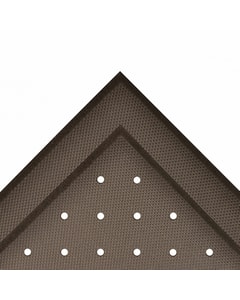 Superfoam™Extremely lightweight PVC/Nitrile foam blend anti-fatigue matModel No: T17Starting at $ 51.30
 -
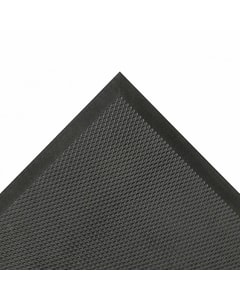 Superfoam™ Revive RSSuper soft rubberized gel foam anti-fatigue mat for extreme comfortModel No: 425Starting at $ 28.00